
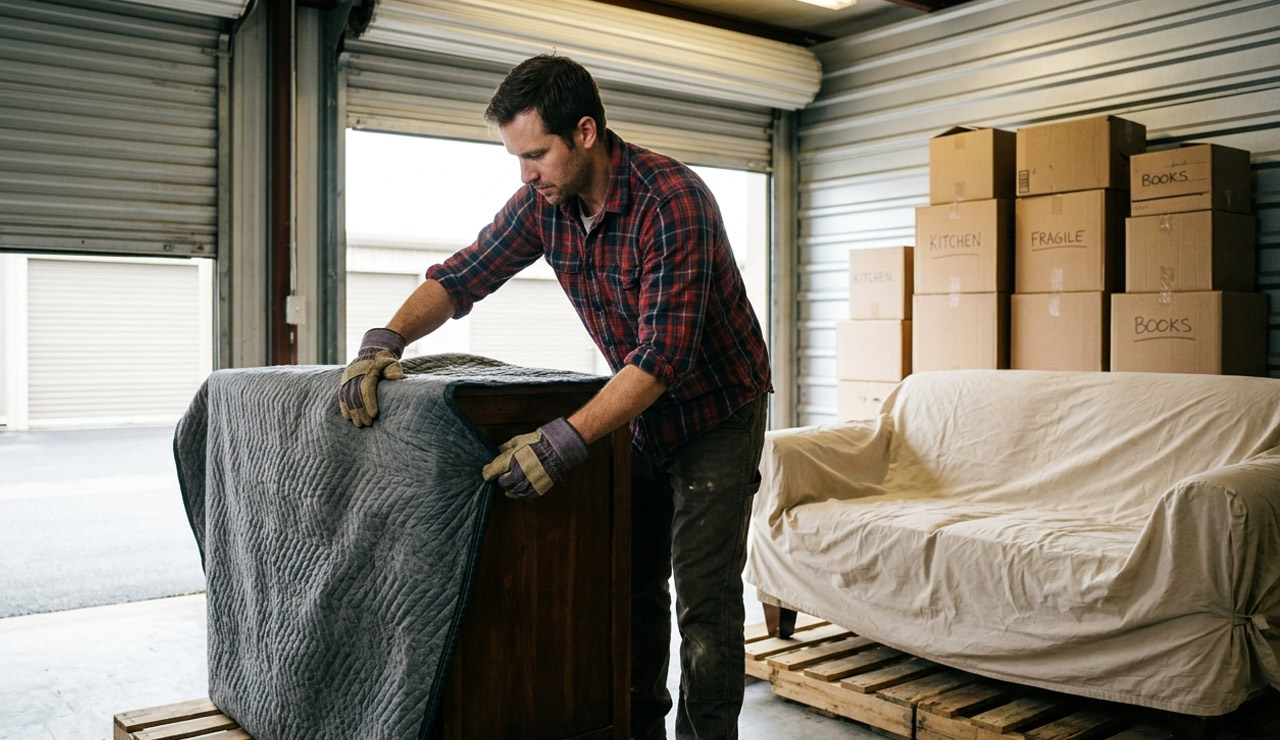
Every week I talk with Canadians who put a sofa, a dining set or a family heirloom into storage and later opened the door to warped wood, cracked leather or a musty smell that would not go away. The frustrating part is that almost all of that damage could have been avoided with a little planning. In this guide I explain how to store furniture without damage in Canada, from the humidity and temperature your pieces need to how to wrap each material, arrange your unit and decide whether climate control is worth the extra cost where you live.
What Damages Stored Furniture
After years of helping Canadians compare storage options, I have learned that furniture rarely gets ruined in one dramatic moment. The damage builds slowly, over weeks and months, while the unit door stays closed. When I trace a ruined dresser or a mouldy sofa back to its cause, it almost always comes down to four factors.
1. Humidity. Wood absorbs and releases moisture from the air, so it swells in damp months and shrinks in dry ones. That constant movement warps tabletops, lifts veneer and loosens glued joints. In coastal BC, trapped moisture also invites mould into fabric and unfinished surfaces.
2. Temperature. Big swings between seasons are harder on furniture than steady cold or steady heat. In an unheated unit on the Prairies, leather can dry out and crack, finishes can turn cloudy and old glue can become brittle after a few freeze and thaw cycles.
3. Pests. Mice, moths and silverfish love upholstery, stuffing and raw wood. A few crumbs left in a sofa or a cardboard box sitting directly on the floor is often all it takes to invite them in.
4. Pressure. Weight that stays in one place for months leaves a permanent mark. Boxes stacked on a sofa flatten the cushions, and a mattress left without proper support can sag and lose its shape for good.
The good news is that every one of these risks is predictable, which means you can plan for it. In the sections below I show you exactly how I would prepare, wrap and arrange each piece so it comes out of storage looking the way it went in.
Ideal Humidity and Temperature for Stored Furniture
When I review storage facilities for this directory, the first thing I look for is whether a unit keeps conditions steady. Furniture handles a cool or slightly dry room surprisingly well, but it struggles when humidity jumps from 30% during a January cold snap to 70% in a wet spring. As a rule of thumb, I aim for relative humidity between 40% and 55% and a temperature that stays roughly between 10°C and 25°C, with as little change from week to week as possible. The table below shows the targets I use for each type of furniture.
| Furniture type | Ideal humidity | Ideal temperature | What happens outside this range |
|---|---|---|---|
| Solid wood | 40% to 55% | 10°C to 25°C | Warping, cracks and loose joints |
| Veneer and particleboard | 40% to 55% | 10°C to 25°C | Peeling veneer and swollen edges |
| Leather | 40% to 55% | 10°C to 25°C | Drying and cracking, or mould when damp |
| Upholstery and mattresses | Below 60% | 5°C to 25°C | Mildew, stains and musty odours |
| Antiques | 45% to 55%, kept steady | 15°C to 22°C | Splits and lifting inlays |
| Metal furniture | Below 50% | Any, if condensation is avoided | Rust and pitting |
| Glass and mirrors | Not critical | Avoid sudden changes | Cracks from thermal shock |
Do You Need Climate Controlled Storage? Weighing Cost and Risk
Whether climate control is worth paying for depends less on the furniture itself and more on where in Canada you live, how long the pieces will sit in the unit and how much it would cost you to repair or replace them if something went wrong.
What Changes in Coastal BC, the Prairies, Ontario and Quebec
In Vancouver, Victoria and the rest of coastal BC, winters are mild but the damp season runs from October to April, so humidity is the real threat. I have seen sofas come out of standard units smelling musty after a single rainy season, which is why I suggest an indoor or climate controlled unit for anything upholstered or made of wood if you are storing it for more than a couple of months.
On the Prairies the problem flips. Calgary, Edmonton and Winnipeg have very dry air and deep cold, and Calgary adds chinooks that can raise the temperature by 20 degrees in a day, which is tough on leather and solid wood. Ontario and Quebec get the worst of both worlds, with humid summers and freezing winters, so that is where I consider climate control most important for long term storage.
How the Price Difference Varies by City
When I compare listings in our directory, the premium for climate control is usually highest in Vancouver and Toronto, where land and energy cost the most, and noticeably smaller in mid sized cities and suburbs. The best way to see the real gap where you live is to open your city page, filter by climate controlled units and compare the same unit size side by side with a standard unit at the same facility.
The way I decide is simple. I multiply the monthly difference by the number of months I plan to store, then compare that number with the cost of refinishing or replacing my most valuable piece. If the premium is $40 a month, six months adds up to $240, which is still less than what most shops charge to repair one warped dining table.
Preparing Furniture for Storage Step by Step
I always start with a deep clean, because anything you leave on a piece goes into storage with it. I vacuum sofas and chairs, including under the cushions, wipe wood with a gentle cleaner and condition leather so it does not dry out. Then I let everything sit for at least a full day before wrapping, since even slightly damp fabric is enough to start mould in a closed unit.
Next, I take apart whatever comes apart easily. Bed frames, table legs, shelves and desk tops store more safely when they are separated, and they put less stress on joints and corners. I put every screw and bolt in a labelled bag and tape it to the underside of the piece it belongs to, which saves me a frustrating search on moving day.
Finally, I photograph each item and note any existing scratches or dents before it leaves the house. This takes about ten minutes and gives me proof of condition if I ever need to make an insurance claim. If you have never done this before, my guide on creating a home inventory before storage walks you through the whole process.
How to Wrap Furniture by Material
The biggest mistake I see is people wrapping everything tightly in plastic because it feels like the safest option. In reality, plastic traps moisture against the surface and creates the perfect conditions for mould, especially in a unit without climate control. My rule is to cover furniture rather than seal it, choosing breathable materials that block dust and scratches while still letting air move. Each material needs a slightly different approach, so this is the table I use when I pack.
| Material | Best wrapping | What to avoid | My extra tip |
|---|---|---|---|
| Solid wood | Moving blankets or cotton sheets | Plastic wrap touching the finish and tape stuck directly on the wood | Apply a light coat of furniture polish before covering |
| Particleboard and veneer | Moving blankets with corner protectors | Damp floors and heavy items stacked on top | Store flat panels on a solid base so they do not sag |
| Leather | A breathable cotton cover after conditioning | Plastic, which makes leather sweat, and newspaper, which can stain | Keep it away from dyed fabrics that could transfer colour |
| Upholstery | A breathable fabric sofa cover | Tight shrink wrap and standing sofas on their ends | Keep sofas on their legs with nothing stacked on top |
| Mattresses | A ventilated mattress bag or a cotton cover | Sealed plastic for long periods and storing them bent | Store them flat or well supported on their side |
| Glass and mirrors | Bubble wrap, cardboard corners and a mirror box | Laying them flat under other items | Stand them upright on their edge and mark them as fragile |
| Antiques | Acid free paper against the finish, then padded blankets | Plastic, adhesive tape and anything that rubs the surface | Choose a climate controlled unit and check on them every few months |
Should You Shrink Wrap Furniture?
I do use shrink wrap, but only in specific situations. For me it works best as a second layer that holds moving blankets in place during a move, or as protection for patio furniture and metal pieces that do not absorb moisture. For anything made of wood, leather or fabric that will stay in storage for months, I treat it with caution.
The Pros of Shrink Wrap
- It keeps dust, dirt and pests out of drawers, cushions and other tight spots
- It holds doors and drawers shut so they do not swing open in transit
- It keeps moving blankets firmly in place around each piece
- It works well for patio furniture and other plastic or metal items
- It is cheap and quick to apply
The Cons of Shrink Wrap
- It traps moisture and can cause mould if the piece is not completely dry
- It can stick to finishes and leave marks on wood and leather in warm weather
- It blocks airflow, which becomes a real problem over long storage periods
- It makes checking on your furniture harder because you have to cut it off
- It creates plastic waste every time you move
How to Arrange Furniture Inside the Unit
Before I bring in a single piece, I lay wooden pallets or plastic risers across the floor. Concrete can hold moisture, and even a small leak under the door can soak into the base of a dresser without anyone noticing for weeks. I also leave a gap of a few inches between the furniture and the walls so air can circulate and condensation does not build up against the back panels.
I load the heaviest and sturdiest pieces first and push them toward the back, then work forward with lighter items. Sofas stay on their legs, mattresses stay flat or well supported, and nothing goes on top of upholstered furniture. If I use a dresser or cabinet to hold smaller items, I only fill it with light things like linens and leave the drawers slightly open to let air in.
Finally, I always keep a narrow walkway down the middle of the unit. It might feel like wasted space, but it lets me reach anything without shifting half the unit, and it makes those regular check ins quick and easy. If you need help using the height of your unit wisely, my guide to vertical organization shows how to stack boxes safely above your furniture.
What Size Unit Do You Need for Furniture?
Furniture takes up more room than most people expect, because sofas, bed frames and dining tables cannot be stacked like boxes. I always size up slightly when furniture is involved, since that extra space is what allows the airflow, the gap from the walls and the walkway I described above. The table below is the guide I use, based on the furniture and boxes from a typical home.
| Unit size | Approximate area | What it usually holds |
|---|---|---|
| 5x5 | 25 sq ft | A chair, a small dresser and a few boxes |
| 5x10 | 50 sq ft | A studio apartment or a small one bedroom |
| 10x10 | 100 sq ft | A one bedroom apartment or two bedroom condo |
| 10x15 | 150 sq ft | A two or three bedroom home |
| 10x20 | 200 sq ft | A three or four bedroom home |
| 10x30 | 300 sq ft | A large home with four or more bedrooms |
If you are storing antiques or large pieces that should not touch anything else, I suggest moving up one size from what the table shows. Paying a little more each month is easier to accept than opening the door to a scratched table or a crushed sofa.
Taking Furniture Out of Storage
The moment you move furniture out of storage matters almost as much as how you packed it, especially in winter. If a piece has been sitting in an unheated unit and goes straight into a warm house, moisture condenses on the cold surfaces almost immediately. I leave everything wrapped for about a day after it arrives so the wood and leather can warm up slowly before I uncover them.
Once the covers come off, I let each piece air out for a day or two and check it closely for mould, pests, loose joints or lifting veneer. I vacuum upholstery, give wood a light polish and keep everything away from heat vents and fireplaces for the first few weeks while it adjusts to the humidity inside the house.
Find Climate Controlled Storage Near You
Storing furniture without damage comes down to a few habits I have shared throughout this guide. Clean and dry every piece, wrap it in breathable materials, keep it off the floor and choose a unit that matches both your climate and the value of what you are storing. Do those things well and your furniture should come out of storage looking the way it went in.
If you are ready to compare options, start with your province. You can browse climate controlled and standard units in British Columbia, Alberta, Ontario and Quebec, then narrow your search to your city to see prices, unit sizes and features side by side before you book.